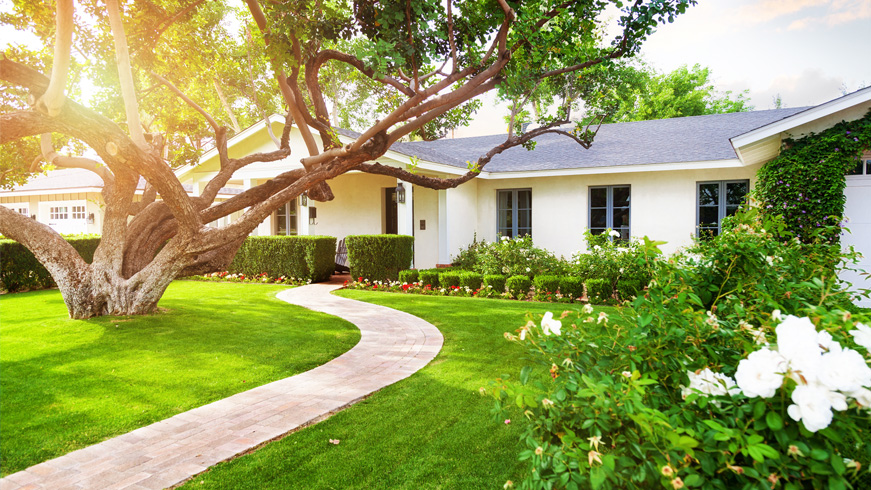
Landscaping can help lower your electricity bill by reducing the amount of heat that reaches your home. Strategically placed trees, shrubs, and other vegetation can provide shade, reduce heat buildup around windows and walls, and lessen the workload on your air conditioning system. While landscaping is not a replacement for insulation or efficient HVAC equipment, it can be a valuable part of a broader energy saving strategy.
Most People Think of Landscaping as Curb Appeal
When homeowners invest in landscaping, they are usually thinking about appearance. They want a beautiful yard. More privacy. Better outdoor spaces. Maybe even a boost in home value.
What many people do not realize is that landscaping can also affect how much energy a home uses.
A well designed landscape can help reduce heat gain, improve outdoor comfort, and make it easier for your home to stay cool during the hottest months of the year. That can translate into lower cooling costs and a more comfortable living environment.
How Heat Makes Its Way Into Your Home
To understand why landscaping matters, it helps to understand where all that summer heat comes from.
Throughout the day, sunlight beats down on your home’s:
- Roof
- Windows
- Exterior walls
- Driveways
- Patios
- Walkways
These surfaces absorb heat and continue releasing it long after the sun begins to set.
As that heat builds up around your home, your air conditioner has to work harder to keep indoor temperatures comfortable.
The more heat your home absorbs, the more electricity your cooling system typically uses. This is where thoughtful landscaping can make a difference.
Trees Are Often the Most Powerful Energy Saving Tool in Your Yard
If you could make just one landscaping improvement for energy savings, planting shade trees would likely provide the biggest impact. Trees help by blocking sunlight before it reaches your home.
Instead of allowing the sun to heat up windows, walls, and roofing materials directly, a mature tree can create a natural barrier that reduces heat gain throughout the day.
This is especially important during summer afternoons when temperatures are at their highest. Over time, as trees grow and their canopies expand, the amount of shade they provide increases as well.
Unlike many home improvements that slowly wear out, trees often become more valuable year after year.
Where Shade Makes the Biggest Difference
Not all shade is equally valuable. For most homes, afternoon sun is the biggest contributor to unwanted heat gain. That means some areas deserve more attention than others.
West Facing Windows
West facing windows often receive intense afternoon sunlight during the hottest part of the day. Adding shade near these areas can help reduce indoor heat buildup.
South Facing Windows
Depending on your home’s orientation, south facing windows may also benefit from strategic shading.
Exterior Walls
Walls that receive prolonged direct sunlight absorb heat and transfer some of that warmth indoors. Trees and large shrubs can help reduce this effect.
Outdoor Living Areas
Patios, decks, and outdoor seating areas become much more comfortable when protected from direct sunlight. The added comfort is often a welcome bonus beyond any energy savings.
Shrubs Can Play an Important Role Too
Trees usually get all the attention, but shrubs can also contribute to a cooler home.
Strategically placed shrubs may help:
- Shade lower wall surfaces
- Reduce reflected heat
- Create natural wind barriers
- Cool areas surrounding the home
While shrubs generally do not provide the dramatic impact of mature shade trees, they can complement a broader landscaping plan and improve overall comfort around the property.
Your Air Conditioner Needs Breathing Room
Many homeowners assume surrounding an outdoor air conditioning unit with plants will automatically improve efficiency.
The reality is a little more complicated. Providing some shade near an outdoor unit may help reduce heat exposure, but airflow is critical.
An air conditioning system needs adequate space around it to operate properly. Plants, shrubs, or decorative features should never block airflow to the equipment.
If you are considering landscaping around your outdoor unit, make sure there is enough clearance for proper operation and maintenance.
Hardscaping Can Affect Energy Use Too
Landscaping is not just about plants. The materials surrounding your home also influence how much heat builds up around the property.
Large expanses of:
- Concrete
- Asphalt
- Stone
- Brick
can absorb significant amounts of heat throughout the day.
Those surfaces continue radiating heat long after sunset, which can make surrounding areas feel warmer. Balancing hardscape features with vegetation can help create a cooler outdoor environment while reducing heat buildup near the home.
Native Plants Can Offer Additional Benefits
Many homeowners are increasingly interested in native and drought tolerant landscaping. These plants are often well suited to local weather conditions and may require less water and maintenance once established.
Benefits can include:
- Lower water usage
- Reduced maintenance
- Better adaptation to local conditions
- Support for pollinators and wildlife
While native plants are not necessarily an energy saving feature on their own, they can contribute to a more sustainable landscape design.
Landscaping Works Best as Part of a Bigger Strategy
Landscaping can help lower cooling costs, but it is most effective when paired with other energy efficiency improvements.
For example:
- Attic insulation helps slow heat transfer.
- Air sealing reduces conditioned air loss.
- Smart thermostats help manage cooling schedules.
- Efficient HVAC systems use less electricity.
- Window coverings help reduce solar heat gain.
When these improvements work together, homeowners often see better results than they would from any single upgrade alone.
Other Ways to Keep Your Home Cooler Naturally
If your goal is reducing air conditioning costs, there are several simple habits that can help alongside landscaping improvements.
Consider:
- Closing blinds during peak sunlight hours
- Using ceiling fans to improve comfort
- Replacing HVAC filters regularly
- Keeping vents clear and unobstructed
- Sealing gaps around windows and doors
These changes may seem small individually, but together they can help reduce the strain on your cooling system.
Energy Savings That Grow Over Time
One of the unique things about landscaping is that the benefits often increase with age. A newly planted tree may provide only modest shade at first. Ten years later, that same tree could be protecting large portions of your home from direct sunlight.
Unlike many home upgrades, landscaping can continue delivering value as it matures.
That value may come in the form of:
- Lower cooling costs
- Greater comfort
- Improved curb appeal
- More enjoyable outdoor spaces
- Added property value
A Cooler Home Starts Outside
When people think about lowering electricity bills, they often focus on what happens inside the home.
Sometimes the solution starts outside.
Strategic landscaping will not eliminate your cooling costs, but it can help reduce heat gain, improve comfort, and support the other energy efficiency improvements you’ve made around your home.
When thoughtfully planned, your yard can do more than look good. It can help your home work a little smarter, too.